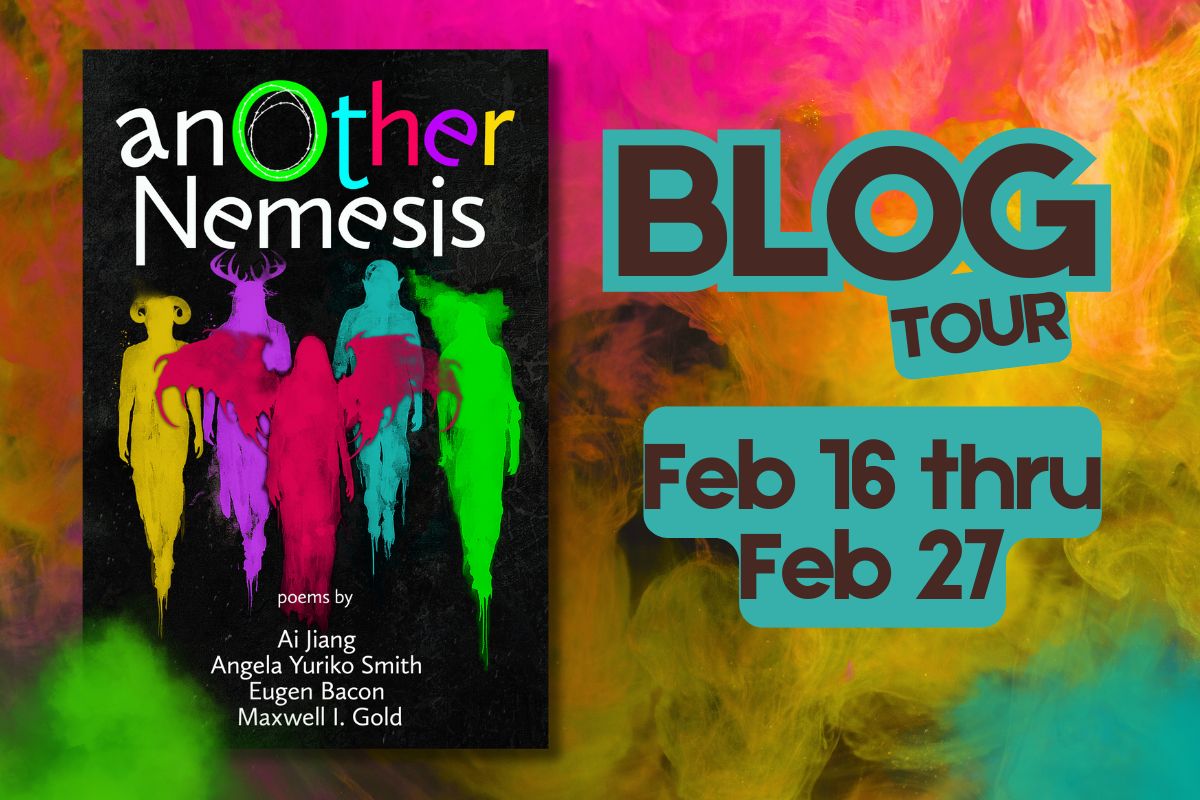
by Angela Yuriko Smith
My experience with anOther Nemesis was shaped by the privilege of working alongside poets I admire and respect. anOther Nemesis is not a single voice pushing back against erasure, but a chorus. Each of us engages resistance differently: through linguistic rupture, through the body, through ancestry, through myth reimagined and unmade. Ai Jiang’s work interrogates borders and belonging with surgical precision; Eugen Bacon dismantles power through Afrosurrealist distortion and embodied truth; Maxwell I. Gold confronts systemic violence and cosmic indifference with unflinching clarity.
Writing in conversation with these voices affirmed something essential for me: collaboration itself is a form of resistance. In systems that isolate, rank, and silence, choosing to build meaning together, without flattening difference, is a refusal. The collective nature of this book insists that no single voice holds the whole truth, and that survival, like art, is often a shared act.
At the time I began writing these poems, I was carrying questions that didn’t want to be solved. I was moving through environments that insisted on clarity while producing emptiness. Poetry allowed me to work inside that contradiction rather than resolve it.
Prose wants answers. Poetry allows questions to remain open.
The poems in anOther Nemesis emerged from my experience of living inside narratives that reward obedience and punish deviation. Some of those narratives were inherited through mythic, religious, and cultural histories. Others were contemporary: algorithmic thinking, optimization culture, the flattening of dissent into “failure” or “noise.” What they shared was a demand for certainty. What I felt instead was fracture.
Rather than discard those myths, I chose to channel them.
Gods, nemeses, prophets, and tricksters appear throughout my poems not as abstractions, but as pressure points. They became ways of naming forces that still shape us even when we pretend they don’t. Whether we acknowledge them or not, authority, judgment, salvation, and surveillance influence our choices. Myth, for me, isn’t nostalgia. It’s a diagnostic tool. When something refuses to die, it’s usually because it’s still doing work somewhere in the system.
Many of these poems were written as acts of confrontation and witnessing. I wasn’t trying to solve anything. I was trying to stay present with what felt unresolved. Repetition, variation, and echo became part of the inquiry. Poetry gave me permission to let meaning remain unstable.
That permission matters.
One of the things I’ve learned through both my own writing and my work with other authors is how often writers abandon projects not because they lack skill, but because they lack permission. Permission to write without knowing where something is going. Permission to work outside dominant narratives of productivity or marketability. Permission to follow a line of inquiry simply because it won’t leave them alone.
That’s where opportunity comes in, not just in the traditional sense of publications or platforms, but in the deeper sense of conditions that allow work to exist.
Writers flourish when they are given clear paths, supportive frameworks, and room to experiment without being immediately evaluated. Opportunity isn’t just about exposure; it’s about access to time, tools, language, and community.
Poetry resists closure because it allows multiple truths to coexist. Sometimes the most accurate response to a broken narrative is not a counter-argument, but a fracture that refuses to be healed and hidden. Writing this book reminded me that art doesn’t have to justify itself in advance. It only has to be honest about the questions it’s asking.
For writers working on their own difficult or liminal projects, my advice is simple: pay attention to the form that keeps showing up for you. Trust the work that won’t resolve neatly. Seek out opportunities that support inquiry rather than demand answers.
Books don’t always begin with intention. Sometimes they begin because a writer needs a language that can survive contradiction. The rest follows from there.
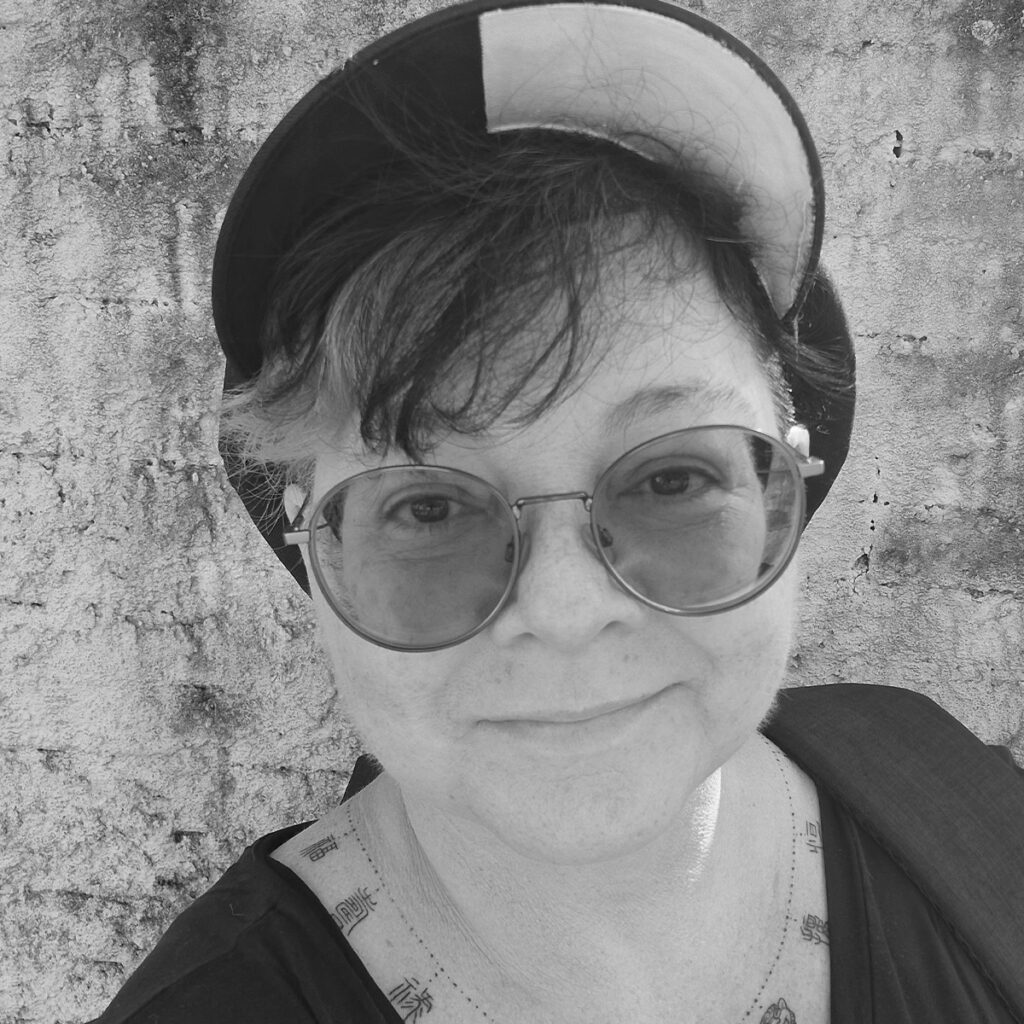
Angela Yuriko Smith is a poet, editor, and two-time Bram Stoker Award winner. A former president of the Horror Writers Association and publisher of Space and Time magazine, she now helps writers find aligned opportunities and sustainable creative paths through her Authortunities Substack.
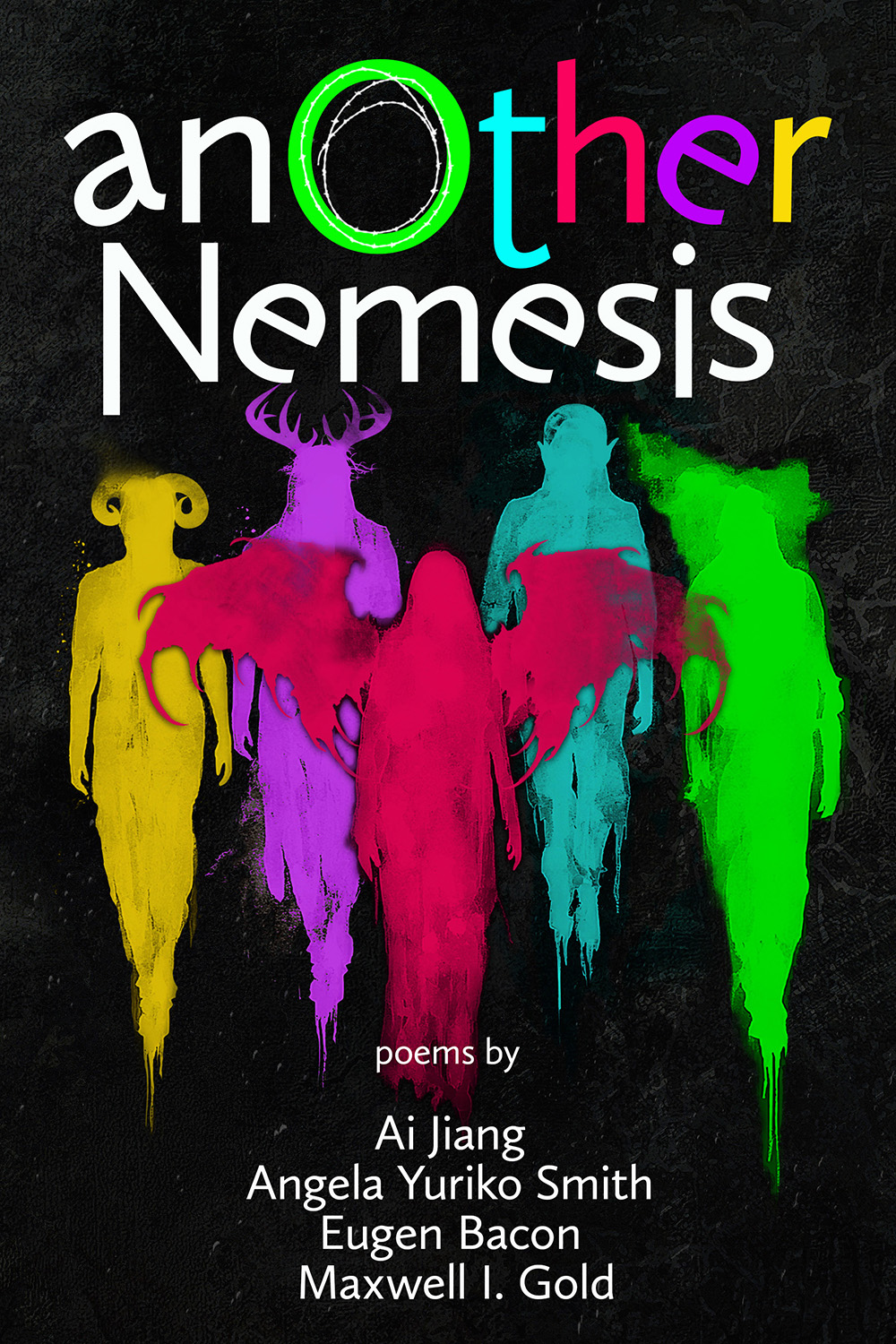
anOther Nemesis by Ai Jiang, Angela Yuriko Smith, Eugen Bacon & Maxwell I. Gold
RELEASE DATE: February 17, 2026
GENRE: Dark Speculative Poetry
BOOK PAGE: https://meerkatpress.com/books/another-nemesis/
SUMMARY:
This dark and thought-provoking poetry collection is co-authored by four multi-award winning authors and poets, Ai Jiang, Angela Yuriko Smith, Eugen Bacon and Maxwell I. Gold.
anOther Nemesis unravels sinister speculative poems themed The Colonizers, Primal Sources, Nameless Others and Crooked Ontologies. It reconnoitres words as weapons, reshaping to the unworldly, casting transfigurations of that which was never meant to be changed, and featuring poignant behind-the-poems by each poet.
The extraordinary assemblage interrogates the ways cultures, language, information, and the lack thereof are used as means of control; how voices will always rise against systems that rewrite identity, suppress truth, and silence dissent; the distinctions of purity and diffusion and the infinite number of fates upon which our existence is simultaneously contingent; how Ubiquitous indifference can sometimes be the cruelest villain of them all… and more!
BUY LINKS:
Meerkat Press | Bookshop.org | Amazon
ABOUT THE AUTHORS:
Ai Jiang is a Chinese-Canadian writer, Ignyte, Bram Stoker, and Nebula Award winner, and Hugo, Astounding, Locus, Aurora, and BFSA Award finalist from Changle, Fujian currently residing in Toronto, Ontario. She is the recipient of Odyssey Workshop’s 2022 Fresh Voices Scholarship and the author of A Palace Near the Wind, Linghun, and I AM AI. Find her at www.aijiang.ca.
Angela Yuriko Smith, former president of the HWA and publisher of Space and Time magazine, is the proud recipient of multiple awards, including two Bram Stokers. As a Publishing Coach, she helps writers search less and submit more with her weekly calendar of author opportunities at authortunities.substack.com.
Eugen Bacon is an African Australian author. She is a Solstice, British Fantasy, Ignyte, Locus and Foreword Indies Award winner. She’s also a twice World Fantasy and Shirley Jackson Award finalist, and a finalist in the Philip K. Dick Awards and the Nommo Awards for speculative fiction by Africans. Eugen is an Otherwise Fellow, and was also announced in the honor list for “doing exciting work in gender and speculative fiction.” Danged Black Thing made the Otherwise Award Honor List as a “sharp collection of Afro-Surrealist work.” Visit her at eugenbacon.com.
Maxwell I. Gold is a Jewish-American cosmic horror poet and editor, with an extensive body of work comprising over 300 poems since 2017. His writings have earned a place alongside many literary luminaries in the speculative fiction genre. His work has appeared in numerous literary journals, magazines, and anthologies. Maxwell’s work has been recognized with multiple nominations including the Eric Hoffer Award, Pushcart Prize, and Bram Stoker Awards. Find him and his work at www.thewellsoftheweird.com.
GIVEAWAY: $25 Meerkat Press Giftcard
https://meerkatpress.com/?rafflepress_page=rafflepress_render&rafflepress_id=7